


Dahlia Guide: Flowering and Care

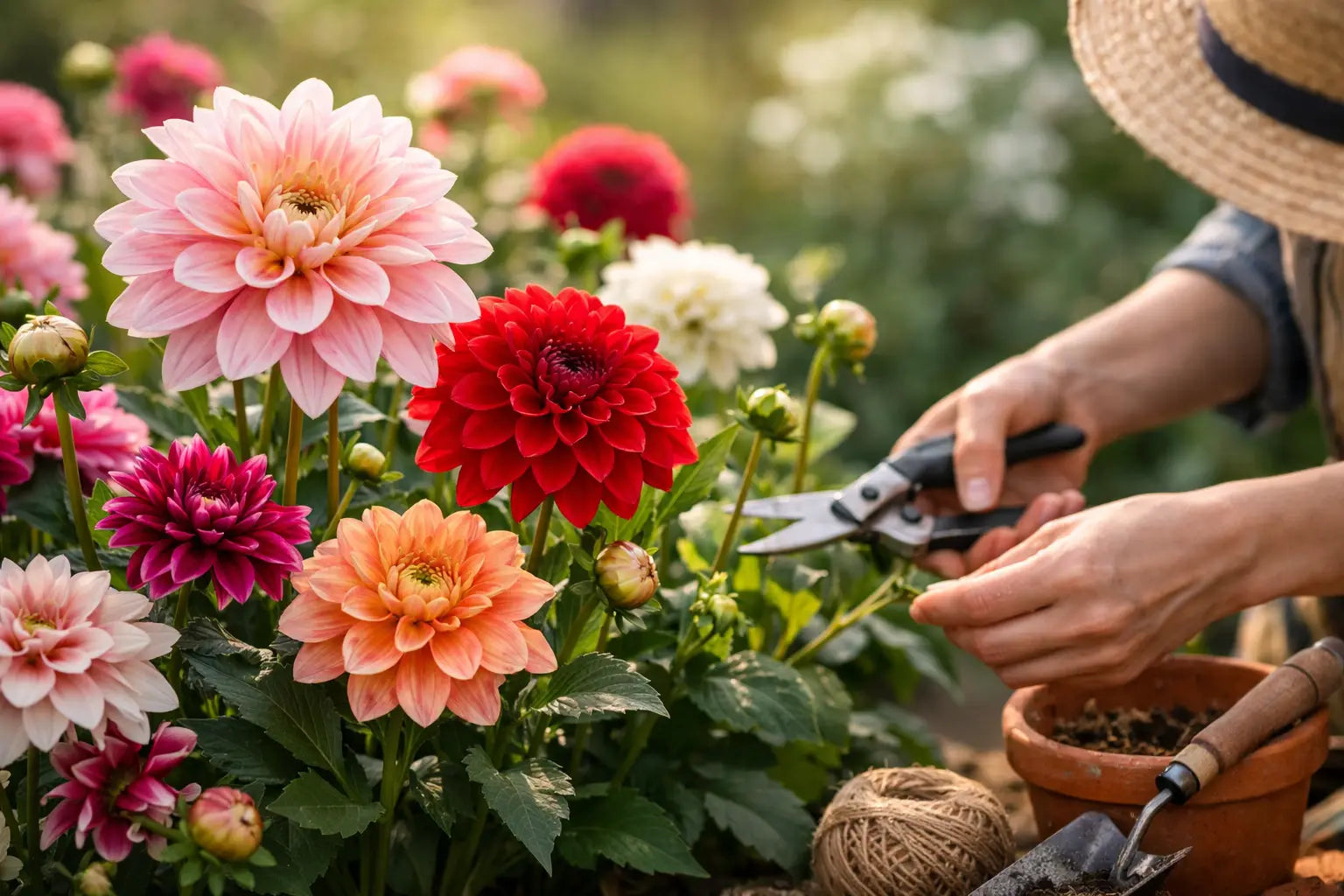
Anyone who has seen dahlias in full bloom quickly understands why they shape so many gardens in summer. Large flower heads, delicate forms, vibrant colors—and at the same time, a plant whose care does not have to be complicated. That is exactly what this dahlia guide is for: anyone who wants beautiful, healthy plants without a lot of trial and error.
Dahlia guide: What makes this flower so special
Dahlias often seem more demanding than they really are. They do not need a complicated care routine, but they do respond clearly to the right conditions. If the location, watering, and pruning are right, they reward you with a long flowering season from summer well into autumn.
What makes dahlias special is their variety. There are small, delicate types for pots and balcony boxes, as well as tall plants with large blooms for garden beds and lush bouquets. They are especially loved as cut flowers because they feel fresh, vibrant, and seasonal—ideal when a bouquet should look thoughtful and intentional rather than generic.
The right location matters from the start
Dahlias love light. A sunny, sheltered spot is almost always the best choice. The more sun they get, the stronger their growth and flowering will be. Partial shade can sometimes work too, but then the blooms are often smaller or appear later.
Loose, nutrient-rich soil is also important. Dahlias do not like waterlogging at all. If water sits around the tubers, the risk of rot rises quickly. In heavy soils, it helps to work in some compost and airy material. This makes the soil lighter and supports root development.
Similar rules apply in pots. The container should be large enough, have drainage holes, and should not be too shallow. Small pots dry out too quickly, while very large varieties are more likely to topple over in them. So it always depends on the variety.
When dahlias should be planted
Dahlias are sensitive to frost. That is why patience is worth it when planting. The tubers should only go into the bed or planter once no more late frosts are expected. In many regions, mid-May is a good time.
If you want to start earlier, you can pre-sprout the tubers indoors or in a sheltered area. This often gives them a head start on flowering. At the same time, it does mean a little more effort, because young shoots are delicate and need to be slowly acclimatized to outdoor temperatures.
When planting, the rule is simple: do not place them too deep. The tuber should be covered with a few centimeters of soil, but not buried like a tulip bulb. Tall varieties will also appreciate support right from the start. That way, you avoid damaging the roots later when adding stakes afterward.
Watering without overdoing it
A common mistake with dahlias is not too little water, but watering the wrong way. Newly planted tubers need restraint at first, as long as no strong shoots are visible. As soon as the plant starts growing and temperatures rise, its water needs increase noticeably.
Then the rule is: water deeply rather than little and often. The soil should stay evenly moist, but never soggy. In hot weeks, that may mean daily watering in pots, while in beds it is often less frequent. What matters is not the calendar, but how dry the soil and location really are.
There is no need to water the leaves and blooms unnecessarily. Watering directly around the root area is usually the better choice. It may not look dramatic, but it helps prevent fungal problems and protects the blooms.
Nutrients for a long flowering season
Dahlias are not plants that thrive on neglect. If you want plenty of blooms, regular nutrients matter. Humus-rich soil with compost is a good start. During the growing and flowering period, a balanced fertilizer can be a smart choice.
Too much nitrogen, however, is not a good idea. The plant may produce strong leafy growth, but often flowers less. A balanced supply is better, one that supports both blooming and stability. Here too, more is not automatically better.
In pots, feeding is usually more important than in beds because the nutrients in the limited volume of soil are used up more quickly. Applying moderate fertilizer at short intervals is often safer than one heavy feeding.
Pruning dahlias: More blooms, better shape
No good dahlia guide can skip pruning, because this is where a lot of potential lies. Regularly removing faded blooms is one of the simplest ways to extend the flowering season. The plant then puts its energy into new buds instead of seeds.
Dahlias also benefit from consistent cutting as cut flowers. Harvesting fresh, open blooms often encourages more flowers to follow. The only thing that matters is not cutting randomly just anywhere. It is best to cut above a strong pair of leaves or a side shoot.
With young plants, pinching can be useful. This means removing the shoot tip early so the dahlia grows bushier. It does not suit every variety or every goal. Anyone looking for especially large individual blooms will often proceed differently from someone who prefers many medium-sized stems for bouquets.
Typical problems and what really helps
When dahlias struggle, it is often due to a few recurring causes. Slugs are especially an issue with young shoots. They can damage growth badly in a short time. The main thing that helps here is early monitoring. Once the plant is strong, it can usually cope better with minor damage.
Aphids can also appear, as can powdery mildew in unfavorable summers. Not every discoloration is immediately dramatic. Often, giving the plant more air circulation, adjusting the watering rhythm, or removing heavily affected parts is enough. If you react right away with too many treatments, you can sometimes upset the balance in the garden even more.
If dahlias hardly flower at all, it is worth taking a sober look at the basics. Are they getting enough light? Has the fertilizer been too nitrogen-heavy? Is the soil too dry or too wet? With this plant in particular, simple corrections often solve more than complicated measures.
Dahlias in the garden bed or in a pot?
Both work well, but the differences are noticeable. In garden beds, dahlias usually develop more vigor if the soil is right. They root more deeply, dry out more slowly, and large varieties often reach their full potential.
In pots, they are more flexible. That is practical for patios, balconies, or entrance areas. It also allows colors and forms to be placed with purpose, whether to suit the season or a particular style. The care effort there is usually higher, however, especially when it comes to watering and feeding.
For smaller spaces, compact varieties clearly have the advantage. Large dinnerplate dahlias look spectacular, but in small containers they can quickly feel out of proportion. If you want an easy start, medium-height varieties are often the better choice.
How to keep dahlias beautiful in a vase
Dahlias make wonderful cut flowers when they are cut at the right time. Buds that are only half open often do not reliably continue opening in the vase. So it is better to cut blooms that are already open, but still look fresh and firm.
The stems should be cut cleanly and placed in fresh water. A clean vase matters more than many people think. Changing the water and giving the stems a fresh cut will usually extend their vase life noticeably. Direct sun and heat will shorten it.
Especially in hand-tied bouquets, dahlias bring a special fullness. They feel seasonal, high-quality, and personal. That is why they are not only popular in your own garden, but also when flowers are chosen carefully as a gift—with feeling, but without sentimentality.
Overwintering without the drama
Because dahlias are not winter hardy, the season does not simply end with the first cold evening. After the first frost, the above-ground parts become unsightly. That is the right moment to dig up the tubers.
They should be lifted carefully from the soil, cleaned roughly, and stored dry. A cool, frost-free place is ideal. Too much warmth makes them sprout early, too much moisture encourages rot, and too much dryness can make them shrivel. Conditions are rarely perfect, but calm, controlled storage gives them the best chance for the next year.
Some gardeners leave dahlias in the ground in very mild areas. That can work, but it is always a bit of a risk. If you are attached to a variety, it is better to lift the tubers.
Which dahlia suits which occasion?
Not every dahlia has the same effect. Pompon dahlias look neat and playful, cactus dahlias feel more lively and slightly dramatic, while decorative varieties often appear especially lush. In the garden, this is a matter of taste. For bouquets and gifts, the overall effect matters too.
Rich tones like burgundy, orange, or pink draw the eye and work beautifully in expressive arrangements. Soft apricot, cream, and blush shades feel gentler and more elegant. If you are sending flowers or bringing them as a gift, dahlias are often exactly the right choice when the bouquet should feel seasonal, heartfelt, and anything but ordinary. You can explore the topic further in the article Hydrangea guide for flowering and care.
If you are just getting started with dahlias, you do not need a perfect strategy. A sunny spot, a little attention, and an honest look at the plant already go a long way. And that is exactly part of their charm: they look special, yet remain pleasantly approachable when it comes to care.
Latest blog posts

 May 28, 2026
Rose Guide: Choosing Roses and Understanding Their Meaning
Our rose guide shows you which roses suit the occasion,...

 May 26, 2026
Affordable Flower Delivery to Vienna, Austria
Looking for affordable flower delivery in Austria? Here’s how to...

 May 26, 2026
Buying Plants in Vienna – What Matters
Buying plants in Vienna made easy: here’s how to find...

 May 25, 2026
Orchid Guide for Healthy Blooms
Orchid guide with clear tips on placement, watering, repotting, and...

 May 24, 2026
Hydrangea Guide: Flowering and Care
Hydrangea guide to the best location, care and flowering: how...

 May 23, 2026
Choosing the Right Women's Day Flowers in Vienna
Order Women's Day flowers in Vienna easily online: which flowers...