


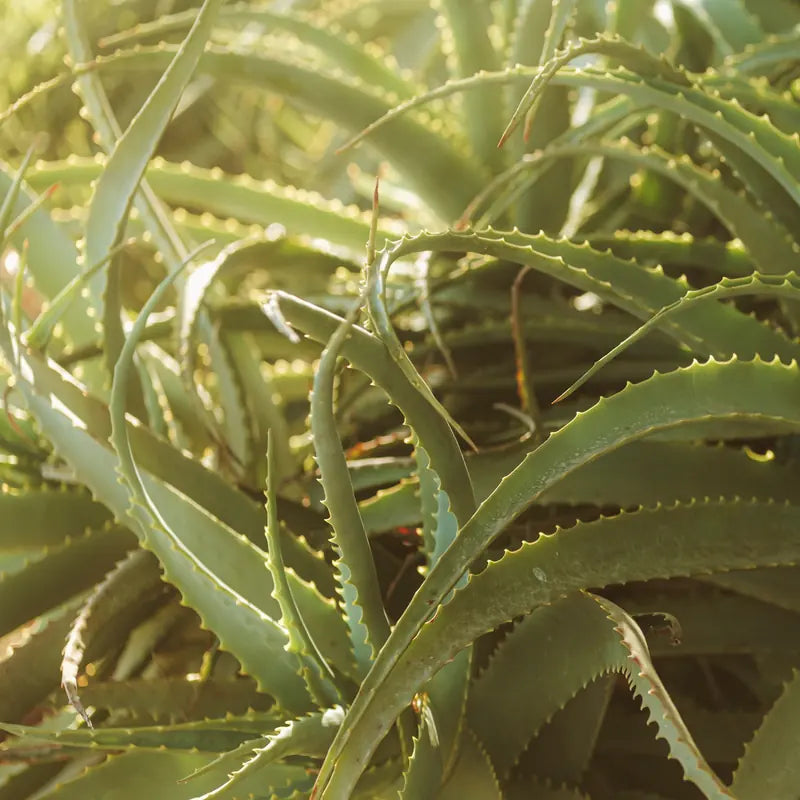
Watering, repotting, offshoots & uses
Aloe Vera is both a houseplant and a home remedy in one. As long as you do not drown it. Also recommended in this context: Howea Forsteriana. Also recommended in this context: Zamioculcas.
Aloe Vera is one of the few plants you can use both as decoration and as a remedy. The gel inside its thick, fleshy leaves cools sunburn, soothes irritated skin, and has been used in natural medicine for thousands of years. Cleopatra is said to have used it as a beauty treatment.
As a houseplant, Aloe Vera is wonderfully easy to care for — provided you understand one thing: it is a desert plant. It wants little water, lots of light, and to be left alone. The most common mistake is overwatering.
A quick profile: Aloe Vera
Botanical: Aloe barbadensis miller
Origin: Arabian Peninsula
Family: Asphodelaceae
Hardy: No (min. 10°C)
Location: Bright to full sun
Watering: Very little (every 2–3 weeks)
Use: decoration, skincare, medicinal plant
Difficulty: very easy
Watering Aloe Vera
Watering Aloe Vera is the point where most people fail — not because of too little water, but too much. Aloe stores water in its thick leaves and can go for weeks without being watered.
The rule of thumb: Only water when the soil has dried out completely. In summer, every two to three weeks; in winter, every four to six weeks. But when you do, water thoroughly and pour away any excess water from the saucer. Waterlogging is certain death — the roots rot within just a few days.
Warning sign: If the leaves become mushy and translucent, the plant has been overwatered. Remove it from the wet substrate immediately, let the roots dry, and repot it in fresh, dry soil. Brown, dry leaf tips, on the other hand, mean too little water or air that is too dry.
Aloe Vera Placement
Bright, bright, bright. Aloe Vera wants as much light as possible. A south-facing window is ideal. In summer, it will happily go outside onto the balcony — but let it get used to direct sun gradually, otherwise it can get sunburned (yes, even Aloe Vera can get sunburned).
In winter, Austrian homes are often too dark. The aloe then stretches toward the light and becomes long and thin instead of staying compact. If possible, place it in the brightest window. A grow light can help.
Repotting Aloe Vera
Repot every two to three years into a slightly larger pot. Important: use cactus soil or succulent soil — regular flower potting soil holds too much moisture. Alternatively, mix regular soil with plenty of sand or perlite (ratio 1:1).
The pot absolutely must have a drainage hole. Clay pots are better than plastic ones because they allow excess moisture to evaporate. A drainage layer of expanded clay or gravel at the bottom of the pot helps prevent waterlogging.
Aloe Vera Offshoots
A healthy Aloe Vera regularly produces offshoots (pups) — small baby plants that grow at the base of the mother plant. As soon as they are about 10 cm tall and have roots of their own, you can carefully separate them and plant them in their own pots.
After separating them, let the offshoots dry for one to two days so the cut surface can heal. Then place them in dry succulent soil and water them for the first time only after a week. This helps prevent rot.
Using Aloe Vera Gel
The Aloe Vera gel from the leaves can actually be applied directly to the skin — for sunburn, minor burns, insect bites, or dry skin. To do this, cut off an outer leaf at the base, slice it open lengthwise, and scoop out the clear gel with a spoon.
Important: Only use the clear gel, not the yellowish layer directly beneath the leaf skin — it contains aloin, which can irritate the skin and have a laxative effect. Also: only use Aloe Vera (Aloe barbadensis), not other aloe species. Not all of them are suitable for use on the skin.
Aloe Vera at MoBlumen Vienna
Aloe Vera in a pot — from EUR 19.90, delivery in Vienna.
Frequently asked questions about Aloe Vera
In summer, every two to three weeks; in winter, every four to six weeks. Only water once the soil has dried out completely. Less is better than too much.
Yes, Aloe Vera is mildly toxic to cats and dogs. The aloin beneath the leaf skin can cause digestive issues. In homes with pets, keep it out of reach.
Yes, but rarely indoors. It needs plenty of light and a cool dormant period in winter. When it blooms, it produces a long stem with tubular yellow or orange flowers.
Fresh flowers at MoBlumen Vienna
Indoor plants, bouquets, and more — delivery in Vienna.


